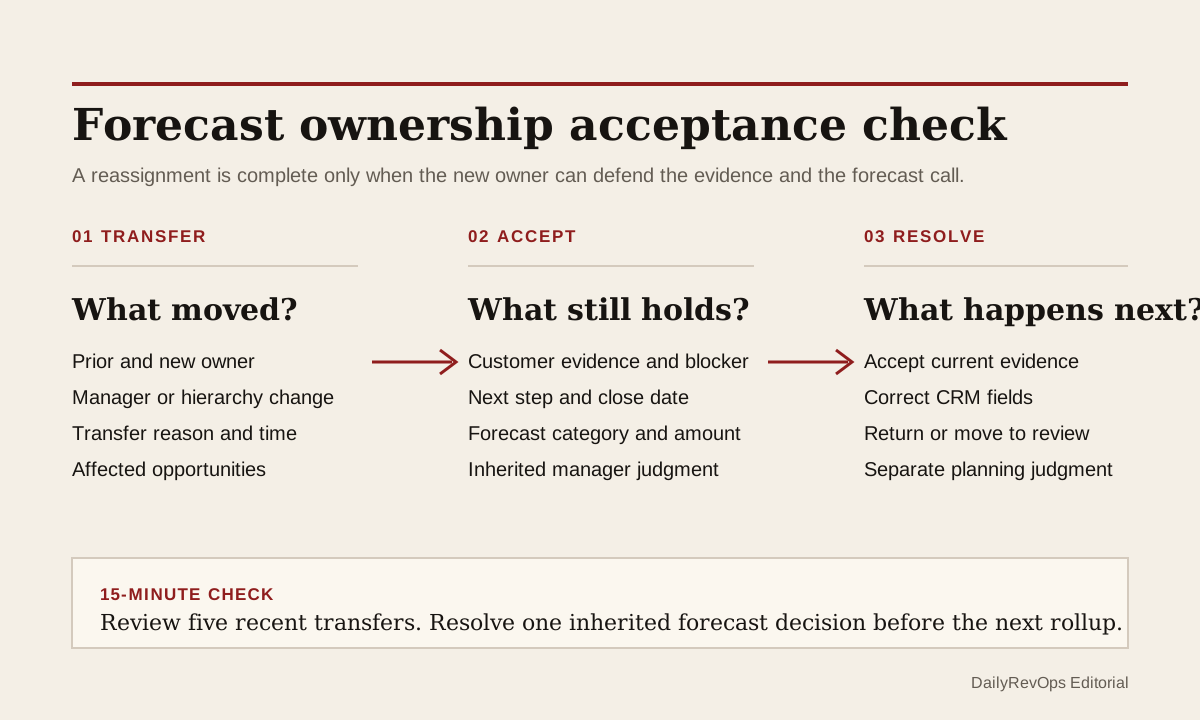
Changing a deal owner, manager, territory, segment, or forecast hierarchy can move the record without transferring the judgment behind it. The new owner may inherit a close date, forecast category, next step, customer story, and manager adjustment that were entered by someone else. If nobody accepts those assumptions, the forecast still looks owned while the commercial evidence is effectively ownerless.
This brief is narrower than a general sales-to-customer-success handoff. It focuses on forecast continuity after ownership changes inside an active pipeline. The useful control is an acceptance check: the receiving owner reviews the current customer evidence, confirms or changes the operating fields, and records which inherited judgments still apply before the deal enters the next forecast review.
What to watch today
Watch for open opportunities whose owner, manager, territory, team, segment, or forecast rollup changed since the last forecast call. A routine territory change can move dozens of records at once. A manager departure can leave a submitted forecast and several deal judgments attached to a hierarchy position that no longer represents the person expected to defend them.
Also watch for records where the owner changed but the close date, forecast category, amount, next step, blocker, manager note, or manual adjustment remained untouched. Unchanged values are not automatically wrong. The problem is that the new owner may not know whether they reflect current customer evidence, a former owner's judgment, a manager planning view, or an old CRM default.
Why RevOps should care
Forecast ownership is more than a user field. It decides who should inspect the deal, who can explain the current call, which team or region receives the rollup, and who owns the next customer action. When the record moves without acceptance, the forecast meeting can contain apparently current deals that nobody has reviewed since the organizational change.
That gap creates two versions of responsibility. The CRM names the new owner, but the commercial narrative still belongs to the previous owner or manager. Sales Ops may then treat inherited commit, best case, or pipeline values as current. Finance and leadership can receive a rollup that changed organizationally without a clear review of the customer evidence underneath it.
HubSpot documents record-owner assignment, property history, and forecast submissions with notes, associated deals, schedules, and history. Salesforce documents record transfers and forecast hierarchy. These sources show that ownership changes, field history, forecast submissions, and rollup responsibility can be structured and inspected. They do not prove that an inherited forecast judgment is accurate or define the right acceptance window for a specific sales team.
CRM and workflow signals to inspect
- Opportunity or deal ID, account, pipeline, segment, territory, team, amount, and currency
- Previous owner, new owner, ownership-change time, change source, and transfer reason
- Previous manager, new manager, forecast hierarchy or rollup position, and effective date
- Current stage, forecast category, close date, amount, next step, next-step owner, and due date
- Last meaningful customer conversation, meeting outcome, source activity, stakeholder, and confirmed blocker
- Latest seller submission, manager submission, manual adjustment, adjustment reason, and submission history
- Acceptance status, accepting owner, acceptance time, reviewed fields, disputed assumptions, and correction owner
- Resolution: accepted unchanged, accepted with CRM changes, returned for evidence, moved out of forecast, or kept as a separately labeled planning judgment
15-minute operator action
Open the five largest or most recently changed opportunities whose owner or forecast manager changed since the last review. For each one, compare the last meaningful customer evidence with the current close date, forecast category, next step, blocker, and latest manager judgment. Check whether the receiving owner has opened or updated the record after the change and whether the next customer action is actually theirs.
Mark each sample as accepted with current evidence, owner changed but evidence not reviewed, next step still belongs to the prior owner, close date unconfirmed, forecast category inherited, manager adjustment inherited, or source history unclear. For one unresolved record, ask the new owner to accept the current view, correct the relevant CRM fields, or move the deal into a review state before the next call.
The output is five classified transfers and one explicit forecast decision. It is not a territory redesign. If all five records need detective work, create a temporary ownership-change queue with the old owner, new owner, changed time, forecast state, acceptance status, and review due date.
Build a small acceptance packet
The receiving owner should not have to reconstruct the full deal from every note and email. A small acceptance packet can show the fields that change the next operating decision: customer-confirmed next step, close date and its reason, forecast category, amount, open blocker, last meaningful activity, current stakeholders, and any manager override or portfolio assumption.
Keep the prior values and their history visible. Acceptance does not mean copying the old story into a new note. It means the new owner can identify which assumptions were reviewed, which were changed, and which still need evidence. If a bulk reassignment is planned, generate the packet before the ownership change so the prior owner or manager can correct obvious gaps while context is still available.
Use a clear due date. A high-value commit deal may need review before the next forecast submission. A lower-risk pipeline record may fit a longer transition window. Until acceptance is complete, label the record as pending review rather than assuming the new owner endorses every inherited field.
Separate customer evidence from inherited manager judgment
A new owner may accept the customer evidence but disagree with the manager forecast position. Keep those decisions separate. The customer may have confirmed a next meeting while the inherited commit judgment is still too strong. Or the CRM close date may remain credible while a top-down adjustment reflects a broader portfolio risk that does not belong on the individual opportunity.
Record whether the receiving owner accepted the deal evidence, whether the new manager accepted the forecast category or submission, and whether a manual adjustment remains active. If the manager judgment has its own review or expiry date, transfer that accountability too. Do not silently convert a former manager's opinion into the new owner's deal-level claim.
Risks and limits
Do not require a long approval workflow for every routine owner edit. Use the acceptance check where the transfer can change a forecast, customer action, territory rollup, renewal motion, or management decision. A materiality rule based on stage, amount, forecast category, renewal timing, or strategic account status can keep the queue small.
Do not treat an unchanged field as proof that it was reviewed. Property history can show what changed and when, but it may not explain whether the new owner understood the customer evidence. Conversely, do not force a field change just to prove acceptance. A reviewed close date or forecast category can remain unchanged when the evidence still supports it.
Finally, do not erase the old owner or manager context after the transfer. Teams need enough history to understand which judgment was inherited and when accountability moved. The goal is not a clean reassignment count. It is a forecast where the person named as owner can explain the evidence, next action, close date, category, and any inherited management judgment before the number is trusted.
Related reading
Manual forecast overrides need an expiry rule · Forecast commit needs CRM evidence · Revenue forecasting workflows · Weekly forecast review with CRM evidence · Handoff debt is where RevOps work quietly breaks · Gong vs Clari for revenue intelligence · Salesforce profile · HubSpot profile
Source notes
These official sources support the workflow model and product concepts. They do not prove a specific retention outcome, benchmark, or vendor claim.
- HubSpot assign record ownership: Official reference for assigning owners to CRM records individually, in bulk, through imports, or with workflows where available.
- HubSpot record property history: Official reference for reviewing historical property values, change times, and change sources on a CRM record.
- HubSpot forecast tool: Official reference for forecast categories, forecast submissions, notes, associated deals, schedules, and submission history.
- Salesforce transfer records: Official reference for Salesforce record transfers and the ownership considerations that accompany them.
- Salesforce forecast hierarchy: Official reference for the hierarchy used to organize forecast responsibility and rollups in Collaborative Forecasts.
Last updated: 2026-07-22