Attio's September 23 changelog adds workflow history and an agent log. For RevOps, that matters because automation becomes easier to review when operators can connect a run to the business record that triggered it, the source data available at that moment, the workflow version and the result. The feature does not prove that an automated decision is correct, but it creates a stronger operational record for investigation and process review. That distinction is important as more CRM work moves from fixed rules toward workflows that can interpret context before choosing the next step.
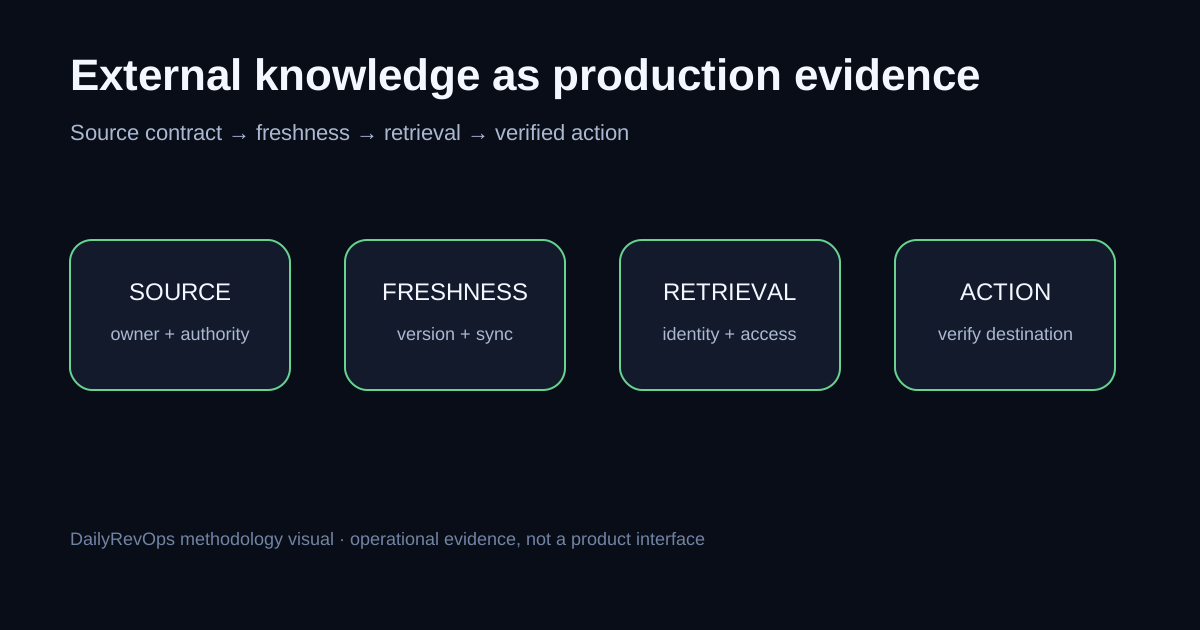
The same pattern appears in other parts of the stack. Zendesk announced dedicated Helpjuice, WordPress and ReadMe sources for its knowledge experiences, while Customer.io added direct Databricks imports for people, events and objects. Both changes make it easier to bring external context into an operational product. They also increase the number of places where a later reviewer may need to ask what information was available when a workflow acted. RevOps therefore needs a simple evidence model that follows the business process rather than the vendor interface.
The first element is a stable business record. A run should point to the deal, company, account, person, subscription, ticket or other object that made the work relevant. If a stage change started the workflow, preserve the material state around that change. If a scheduled data query selected the record, preserve the query version and the stable customer key. This sounds basic, but many automation reviews begin with an execution identifier and only later try to reconstruct which real-world customer or commercial object it represented.
The second element is source provenance. External knowledge can be current, stale, internal, public, contractual or merely descriptive. Those categories matter. A support procedure and a marketing page can both mention the same feature while carrying different operational weight. A warehouse field can be a direct copy of a transactional value or a derived model output. The evidence record should therefore identify the source system, the specific record or document, the relevant timestamp and the business owner of the definition when that is known.
The third element is decision context. Operators do not need a transcript of every intermediate step to review a workflow. They do need to see the operational conclusion that determined what happened next: the category assigned, the branch selected, the proposed value, the account segment or the exception reason. Keeping that conclusion separate from the underlying source evidence makes review much more useful. If the source was wrong, the data process needs attention. If the source was sound but the conclusion was poor, the decision logic needs attention instead.
Time deserves its own place in the model. Customer.io's Databricks integration illustrates why. A query can run at one time while describing behavior observed much earlier. A customer record synchronized this morning might contain product usage from yesterday or a subscription snapshot from the previous billing cycle. RevOps should keep observation time, query time and activation time distinct when the difference can influence prioritization. Otherwise a recent synchronization timestamp can make old business evidence look newer than it really is.
Workflow history also changes how teams should think about reruns. A replay is not automatically the same business event repeated safely. The customer may have changed stage, owner, segment or status since the original run. An operator reviewing a failed or incomplete run should first compare the current record with the state that originally made it eligible. That creates a simple business question before any technical one: is the intended work still relevant now? Run history is most valuable when it makes that comparison easy.
A practical review record can stay compact. Keep the business entity, trigger, relevant source references, source timestamps, workflow version, operational conclusion, resulting task or record change, and a checked-at state after completion where the consequence justifies it. The goal is not exhaustive logging. The goal is to make a future reviewer capable of explaining the business path without depending on memory, screenshots or a colleague who happened to build the workflow.
Measurement should begin with traceability rather than automation volume. Sample successful, failed and replayed runs and ask whether another operator can identify the customer or commercial record, the source evidence, the workflow version, the decision outcome and the final business state. Record which element is missing. This produces a local operating baseline without pretending to be a universal benchmark. It also points directly to repair work because missing source evidence is a different problem from missing workflow history or an unclear destination record.
The broader lesson is that more capable automation increases the value of operational evidence. Attio's run history exposes more of what happened inside the CRM workflow. Zendesk's knowledge connectors and Customer.io's warehouse imports expand the context that can influence work. RevOps should use those improvements to create a clearer chain from business evidence to decision to outcome. The teams that can reconstruct that chain will be in a better position to expand automation without making their revenue process harder to understand.
Source notes
These official sources support the workflow model and product concepts. They do not prove a specific retention outcome, benchmark, or vendor claim.
- Attio 2026 changelog: Official changelog; September 23, 2026 lists workflow history and an agent log.
- Attio workflows: Official workflow product page used for workflow and run-inspection context.
- Zendesk external knowledge announcement: Official September 25, 2026 announcement for dedicated Helpjuice, WordPress and ReadMe connectors.
- Customer.io release notes: Official September 25, 2026 release note for direct Databricks imports.
Last updated: 2026-09-27