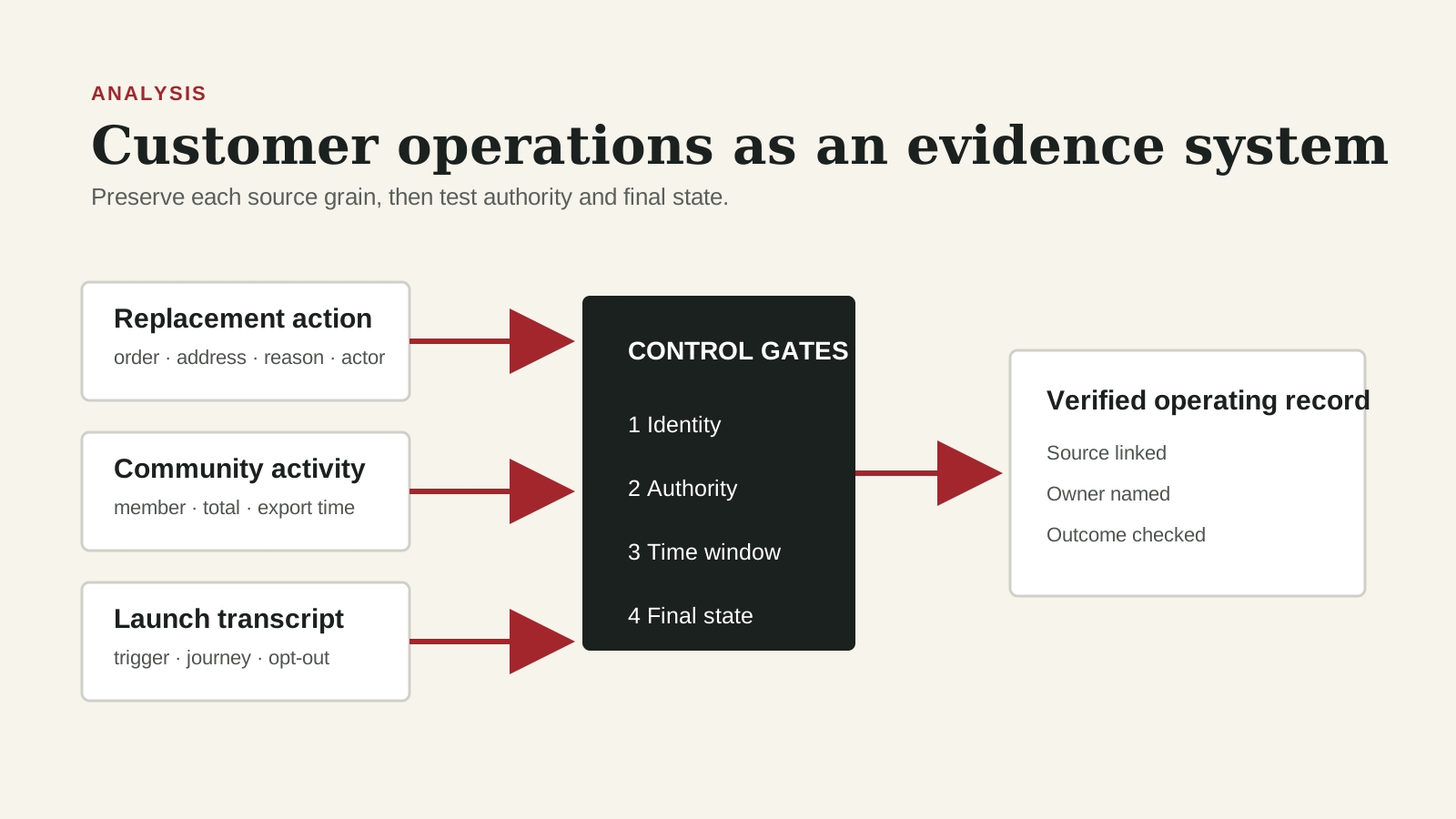
Three official updates published on October 7 show customer operations moving toward evidence that can be reviewed outside the moment of action. Intercom can create a Shopify replacement order for a different domestic address and records replacement activity in a dedicated auditing surface. Gainsight Customer Communities adds cumulative gamification points to its user export. Google now lets an RCS for Business launch submission use detailed step-by-step text transcripts instead of an agent preview video for Google-managed carriers. The products solve different problems, but each creates a record another operator can inspect.
That matters because customer operations often crosses systems before anyone can explain the complete decision. A support teammate acts from a conversation, a commerce system owns the order, a community platform records activity, a CRM owns the account, and a messaging channel governs launch approval. The new evidence is useful only when RevOps preserves its source meaning, joins it with a stable identity and verifies what happened afterward.
Start with the source grain
Intercom's documentation distinguishes the original order from the new replacement order. The replacement is created at zero price, linked back to the original order, given a required reason and recorded as a compensation event. If a different address is used, the country remains the same, the state or province comes from Shopify's list, and the customer receives Shopify's order confirmation. The evidence grain is one compensation action on one original order that creates one new order.
Gainsight's new total_gamification_points field has another grain. It is a cumulative value attached to a community member in the user export. The release does not say that a point represents product adoption, retention, advocacy or renewal probability. An operator therefore needs the point definition, the export time, the member identity and the window or program context before using it beside customer-success data.
Google's launch evidence is a declared experience, not a runtime delivery log. The required material describes message triggers, the step-by-step interaction and the opt-out keywords plus confirmation. A transcript or preview video can demonstrate the intended journey for review, but neither proves every later message followed that path. Launch evidence, execution telemetry and customer outcome must remain separate records.
Join records through explicit authority
A good evidence system tells the reviewer who owns each conclusion. Support Operations may authorize a replacement under an approved policy; Shopify remains the commerce record for the new order; fulfilment owns shipment; the customer owns confirmation of the destination. Community Operations may define points, while CS Operations decides whether and how that activity can inform account work. Lifecycle Operations may assemble an RCS launch packet, while compliance and channel reviewers decide whether the documented experience is acceptable.
Use stable join keys rather than names or copied prose. For a replacement, retain original order ID, new order ID, conversation ID, actor and event timestamp. For a community export, retain the platform member ID, the customer or contact key used for matching, export timestamp and definition version. For a launch packet, retain agent ID, use case, evidence version, reviewer, approval state and the production configuration that follows. These keys make later reconstruction possible without pretending one system owns everything.
Design exceptions before dashboards
The first operational view should be an exception queue. Flag a replacement where identity evidence is missing, a different-country address is requested, inventory is unavailable, the new order cannot be read back or shipment goes to the wrong destination. Flag a community row when the member cannot be matched, the point definition changed, the cumulative value decreased unexpectedly or the export is stale. Flag a launch packet when triggers are vague, an alternative journey is absent, opt-out wording differs from production or carrier-specific requirements remain unresolved.
Each exception needs an owner, source link, due time and close evidence. A dashboard count without those fields simply makes unresolved work more visible. The point of the new records is to move from observation to an inspectable decision: who reviewed the source, what authority they had, which action they took and which final state confirmed the result.
Measure reconstructability
Sample actions from a named period and ask a second operator to reconstruct them. Can the reviewer identify the customer or member, find the source record, understand the definition, locate the actor and version, see the authorized decision and verify the final state? Report eligible count, sampled count and missing components separately for replacement actions, community exports and launch packets. Do not combine them into one maturity score because their grains, consequences and systems differ.
A failed reconstruction should create specific remediation. Missing identity points to mapping or capture. Missing definition points to documentation and version control. Missing authority points to policy. Missing final state points to read-back instrumentation. This is more useful than celebrating that an export or audit tab exists.
Treat evidence as a reusable operating asset
Intercom, Gainsight and Google do not claim these changes improve renewal, support or revenue outcomes by themselves. The opportunity is that important intermediate state becomes exportable or reviewable. RevOps can retain that state with the operating decision and use it across quality assurance, incident review, customer communication and close processes.
The mature design is small and specific: preserve the source grain, link stable identities, name authority, record exceptions and verify the destination. When those controls exist, an export field, audit event or launch transcript becomes more than product telemetry. It becomes a reliable part of the operating record.
Source notes
These official sources support the workflow model and product concepts. They do not prove a specific retention outcome, benchmark, or vendor claim.
- Intercom changelog, October 7, 2026: Official release announcing editable domestic replacement-order addresses and audit-event recording.
- Intercom: Manage Shopify orders from the Intercom inbox: Official implementation documentation for replacement orders, address constraints, order linkage, permissions and audit exports.
- Gainsight CC: See Every Member's Gamification Points in Your User Export: Official October 7, 2026 release adding cumulative gamification points to the user export.
- Google RCS for Business release notes, October 7, 2026: Official release allowing detailed transcripts as an alternative to preview video for Google-managed launches.
- Google RCS for Business launch approval guide: Official launch requirements for trigger, interaction and opt-out evidence, last updated October 7, 2026.
Last updated: 2026-10-08