Two current product changes expose the same operating problem from different directions. Zendesk's October update makes automated-resolution usage easier to monitor and, for eligible allowance-model accounts, easier to expand from supported billing surfaces. Customer.io's October 6 release lets teams manage the Design Studio content lifecycle through an API, from supplied HTML through review, testing, workflow attachment and later publication.
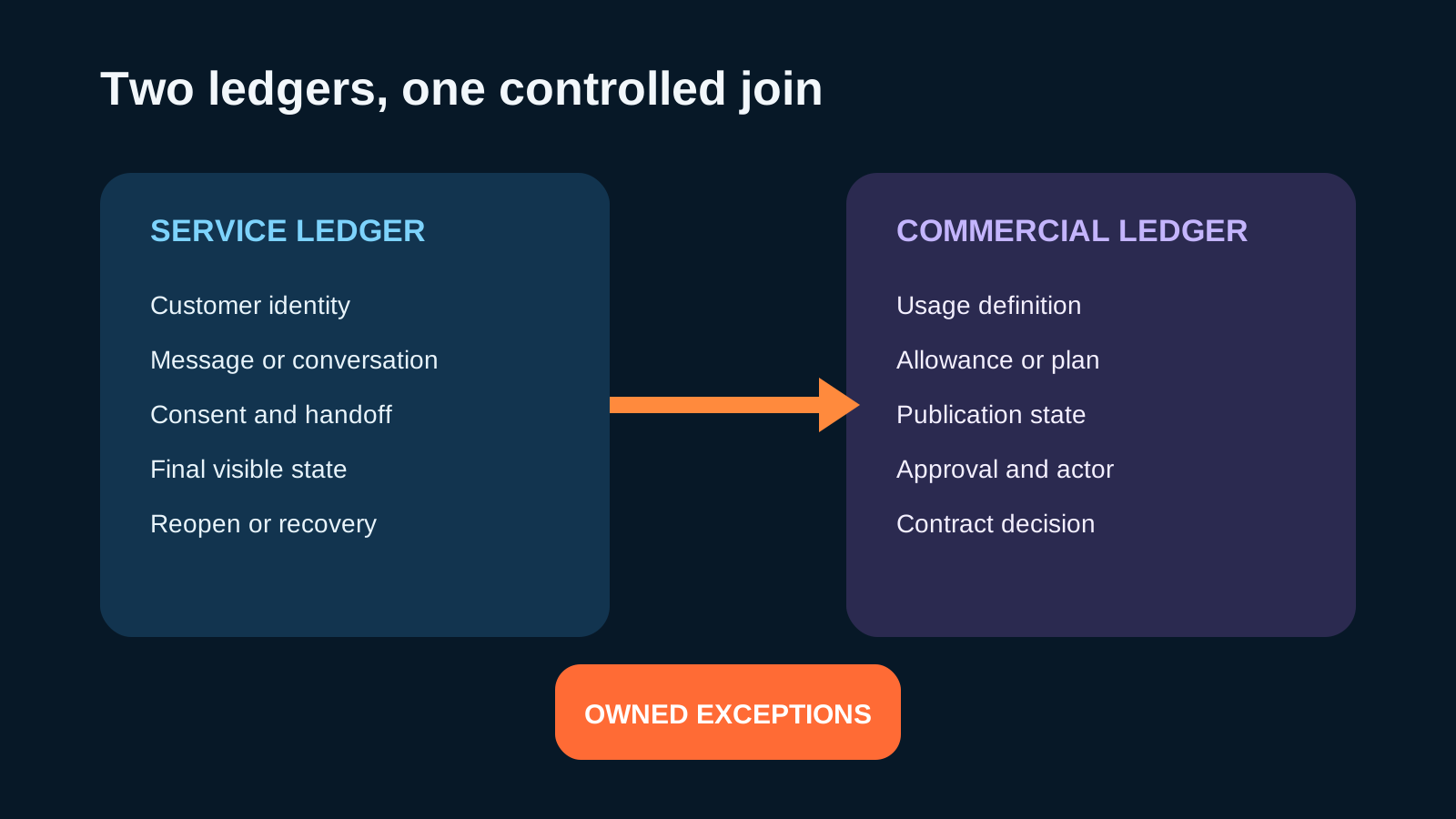
One change concerns support capacity and commercial usage. The other concerns lifecycle content and release state. Both can create a clean vendor-side event while leaving the customer-side outcome uncertain. A usage unit may be counted even though a conversation later reopens. A publish call may succeed while the message is attached to the wrong workflow or blocked by consent. RevOps needs two ledgers and a controlled join between them.
The service ledger records customer-visible state
The service ledger answers what the customer encountered. For support, it includes conversation or ticket identity, intent, automation path, customer-visible resolution, reopen, escalation and final owner. For lifecycle messaging, it includes person or account identity, consent state, segment entry, selected content version, delivery disposition and downstream response where that processing is permitted and relevant.
This ledger should not be a retrospective analytics table assembled only after an incident. Define the identifiers and timestamps before release. Keep source observation, request, platform acknowledgement and verified final state distinct. A message accepted for publication is not yet delivered. A ticket marked resolved is not necessarily a durable customer outcome. The ledger preserves the difference.
The commercial ledger records the vendor-defined unit
The commercial ledger answers what the platform counted, allowed or committed. In Zendesk, the relevant record may include allowance, counted automated-resolution usage, notification threshold and a later subscription change. In a messaging system it may include plan limits, sends, active people, API usage or another contracted unit. The exact definition belongs to the applicable contract and official documentation, not to a convenient internal label.
Commercial records need their own authority. A support administrator may diagnose demand without holding purchase authority. A lifecycle engineer may publish content without owning consent policy or messaging budget. Store the acting identity, account, unit definition, measurement window, amount, approval and resulting subscription or platform state. Do not make the service record carry commercial meaning it was not designed to express.
The join is an operating product
The useful question is not whether the two ledgers match row for row. They often will not. The question is whether each counted or published platform event can be related to enough customer-visible evidence to review service quality, exceptions and financial exposure. That requires stable IDs, versioned mappings and explicit treatment of missing or many-to-one relationships.
For Zendesk, a team might relate a counted usage event to the conversation and final support state, then separately examine reopen and handoff. For Customer.io, a release receipt should point to content and workflow versions; downstream processing should preserve the version that an eligible person actually received. A mismatch enters an exception queue instead of being silently dropped from a dashboard.
Design reconciliations around decisions
Do not build an enormous universal table before naming the decisions it supports. A capacity review needs current allowance, measured usage, forecast range and service-quality signals. A lifecycle release review needs approved source, verified content and workflow association, consent and suppression checks, publication state and recovery evidence. An incident review needs chronology and affected population.
For every decision, write the grain, eligible population, authoritative fields, observation window and allowed actions. Then specify which ledger supplies each field and how fresh it must be. If a number is unavailable, preserve unknown rather than replacing it with zero. Unknown can trigger investigation; a false zero can authorize the wrong action.
Alerts should open controlled work
Zendesk's configurable usage notifications are valuable when they open a case with a threshold, observed value, owner and response target. The case should distinguish investigation, service protection and commercial capacity decisions. A rising count might be expected volume, a taxonomy change, repeated failed automation or a real improvement. The alert is the start of diagnosis, not a verdict.
A programmatic publication event deserves the same pattern. A failed read-back, unexpected workflow link or missing test result should open a bounded release exception. Retain the attempted action and destination response, then retry only after checking whether the first attempt changed state. This avoids both lost work and accidental duplication.
Governance must survive convenience
Direct allowance changes and API-driven publication reduce operational distance. That can be good: fewer handoffs, clearer automation and faster response. It also means role design matters more. Purchase authority, content approval, workflow administration and service ownership should be separately assignable even when one interface exposes several actions.
Use least privilege at action level. A service identity that can create content may not need publication. A support operator who receives usage alerts may not need subscription-change rights. For consequential actions, require explicit approval and read the authoritative destination after execution. NIST's broad risk-management framing is useful here, but the concrete control must be implemented in the target systems.
Measure the reconciliation, not a vague AI outcome
Start with local operating measures: eligible events linked to a service record, events with verified final state, unresolved exceptions, median age of unresolved items, time to owner acceptance, duplicate recovery events and reviewed allowance or release decisions with complete receipts. Publish counts with rates and document exclusions.
Do not claim that a high join rate proves customer value or that a low automation cost proves quality. The measures show whether the team can reconstruct and govern the process. Customer outcomes, service economics and vendor invoices remain separate questions that need their own evidence.
The operating model
Maintain the service and commercial ledgers under different owners, but give them one exception process. Review the highest-risk unresolved joins first: customer harm, compliance exposure, irreversible sends, purchase commitments and missing identity. Keep a recovery action and next evidence for every open item.
Zendesk's new usage controls and Customer.io's expanded API are useful precisely because they expose clearer operating surfaces. RevOps should not collapse them into one dashboard score. The stronger design preserves customer-visible truth and vendor-defined commercial truth separately, then reconciles them wherever a real decision depends on both.
Source notes
These official sources support the workflow model and product concepts. They do not prove a specific retention outcome, benchmark, or vendor claim.
- Customer.io release notes: Official October 6, 2026 release note for managing the Design Studio content lifecycle by API.
- Zendesk: What's new in October 2026: Official page edited October 7, 2026; it documents automated-resolution usage notifications and eligible allowance increases.
- Customer.io: consent records: Official October 1, 2026 release note for retaining consent changes, their scope and origin.
- NIST AI Risk Management Framework: Cross-sector framework used only as general risk-management context; it is not evidence about the vendors.
Last updated: 2026-10-11