HubSpot’s June 2026 updates: Agents get more access, Revenue Hub starts connecting the dots
June's HubSpot updates are focused on turning information you already have into something HubSpot can act on directly.
What the source signals
MarTech published this item on July 24, 2026. DailyRevOps treats it as a medium-signal for crm operations and links to the original article below. The source is the factual starting point; the workflow interpretation on this page is DailyRevOps editorial analysis.
The source preview says: June's HubSpot updates are focused on turning information you already have into something HubSpot can act on directly.
MarTech reviewed more than 100 HubSpot release entries and selected 14 June 2026 updates for managers and administrators. Its direct operator signals span CRM-derived intent, price books, connected quote-to-cash records, wider agent access, service automation, feature-level credit limits, workflow references, and activity-property inspection. The roundup reports a mix of live features, public betas, and private betas; those availability states should not be collapsed into one launch claim.
For pipeline inspection, MarTech says HubSpot can derive two intent-signal types from notes and call or meeting transcripts logged against a deal: key stakeholders and described pain points. The resulting signals are associated with the company record. The source lists the capability as live for Starter and above across all hubs, with signal tracking and HubSpot Credits required. This is HubSpot-generated interpretation of CRM activity, not a verified buyer statement or a replacement for the underlying note or transcript.
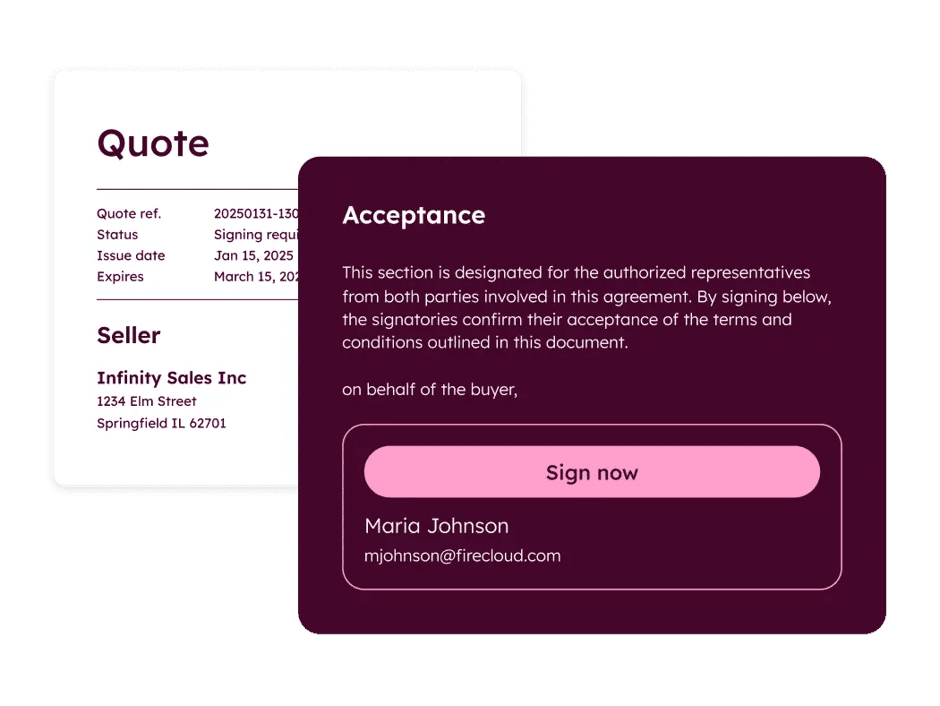
For quote-to-cash, the source reports that Revenue Hub price books can restrict a deal to an assigned collection of products and prices, either through a manual choice or filter-based rules. It also reports a public-beta flow in which an accepted quote creates a contract record that governs billing and payments, including changes and renewals. MarTech notes two beta limits: invoices created by a contract billing schedule cannot be edited afterward, and recurring billing in the connected flow cannot be paused or resumed after it begins. Price books and the connected flow are reported for Revenue Hub Professional and Enterprise, not as generally available across every portal.
The roundup also says Prospecting Agent is live on any paid hub from Starter and uses credits; HubSpot Agent CLI is a public beta for all hubs and tiers; and per-feature AI credit limits are live for paid tiers. MarTech relays HubSpot guidance to begin CLI use with read-only reporting or summaries, review recommendations before broad changes, and use dry-run mode before applying writes. DailyRevOps has not tested tenant eligibility, extraction quality, contract behavior, credit consumption, permissions, rollback, or the current beta terms.
The first review question is whether the signal changes work in CRM stakeholder and pain-point signal governance, Quote-to-contract, billing, payment, and renewal operations, AI agent access, credit, and change control, CRM workflow creation, association, and rollback. A headline can be relevant without being implementation-ready. Confirm the product scope, affected users, data requirements, and actual release or availability details in the original source.
Why this matters to RevOps
The strongest RevOps signal is that interpretation and execution are moving closer to the system of record. A transcript-derived pain point can enter reporting or automation without a rep converting it into a governed field. An accepted quote can create the contract that later drives billing and renewal work. A coding agent can inspect or potentially modify CRM configuration. Each change can reduce a handoff, but each can also turn one wrong inference or configuration into a downstream revenue record.
Stakeholder and pain-point extraction is useful only when operators preserve the difference between source evidence and model output. A person mentioned in a meeting may not be a decision maker. A pain point may be hypothetical, negated, outdated, or attributed to the wrong account. If the generated signal becomes a nurture trigger, account label, manager report, or next-best action, the reviewer must still be able to open the exact note or transcript, see when the extraction ran, and correct the result without rewriting history.
The contract record raises a separate authority question. A deal may be the commercial work-in-progress, while an accepted quote, signed order form, billing platform, or finance system owns the final products, dates, amounts, tax, invoice schedule, payment state, and renewal terms. Connecting those steps can remove reconciliation, but only if RevOps and finance agree which object and field becomes authoritative at acceptance and how amendments, credits, cancellations, failed payments, and renewals are represented.
CRM changes matter when they alter the record model, ownership, routing, automation, or reporting logic that revenue teams use every day. RevOps should translate the source signal into a concrete question about which object, field, workflow, or user action could change.
The useful test is not whether a feature sounds modern. It is whether the change reduces manual work or improves evidence without weakening the CRM as the system of record. Adoption, permissions, data history, and rollback should be considered before a production rollout.
Workflow impact
The affected workflow areas recorded for this item are CRM stakeholder and pain-point signal governance, Quote-to-contract, billing, payment, and renewal operations, AI agent access, credit, and change control, CRM workflow creation, association, and rollback. Relevant source and operating terms include CRM, AI Workflows, Product Updates, HubSpot, Revenue Hub. Use those labels to find the current owner, system, report, queue, or recurring meeting where the signal would create a decision.
Treat the intent feature as a reviewable extraction workflow. Start with the logged note or transcript, associated deal, company match, identified stakeholder or pain point, extraction time, confidence or review state if available, and the automation or report that consumes the signal. Route the first outputs to a review list. Do not let an inferred stakeholder overwrite a verified contact role, and do not let an inferred pain point advance opportunity stage or trigger outreach without corroborating evidence and an accountable owner.
Map the quote-to-cash path before enabling the connected beta: deal and price book, products and discounts, approval, quote version, acceptance evidence, contract creation, billing schedule, invoice, payment, amendment, renewal, and reporting. Name the owner and authoritative field at every transition. Test a standard sale plus an upgrade, downgrade, prorated change, correction, failed payment, and renewal so the team sees where an uneditable invoice or non-pausable schedule changes the exception process.
Keep agent and workflow changes in a separate control lane. A read-only CLI task can inventory stale properties or summarize deals without becoming a writer. A workflow that references a record created earlier in the same run can remove a second workflow, but it also creates a tighter dependency between creation, field availability, task or notification content, retries, and rollback. Version the workflow, test missing values and duplicate execution, and confirm that the newly created record ID is the one used downstream.
Map the signal to the current CRM flow from record creation through enrichment, assignment, stage movement, task creation, and reporting. A change in one step can create hidden effects in another, especially when several automations write to the same field or owner property.
Compare the proposed workflow with the manual path operators use today. If the new path cannot explain why a record changed, who owns the next action, and where the source evidence lives, the automation is not ready for broad use.
What to inspect in the system of record
Use the checklist below as an inspection sequence, not as an instruction to enable a feature immediately. Capture the current state before changing fields, automation, routing, scoring, alerts, or reporting.
For each exception, save the source record, evidence, owner, due date, and expected close condition. That makes the test reviewable and prevents a promising update from becoming an unowned experiment.
Inspect company, contact, deal, activity, note, meeting, call, transcript, stakeholder signal, pain-point signal, and workflow-enrollment records. Confirm the association path from activity to deal to company, the timestamp and author of the source activity, the extraction writer, the current signal value, field or signal history, and every list, report, score, sequence, or automation that consumes it. Keep a correction route for a transcript error, wrong association, duplicate company, or outdated signal.
For Revenue Hub, inspect price book, product, line item, discount, currency, tax, quote version, approval, signature or acceptance, contract, billing schedule, invoice, payment, subscription, amendment, and renewal records. Reconcile a sample from accepted quote through contract and invoice to the finance or payment record. Check whether a changed deal can still alter an accepted commercial record, whether the same renewal value exists on multiple objects, and which status is used in forecast, cash, renewal, and revenue reports.
For agent access and credits, inspect the portal user or service identity, authentication path, scopes, permitted objects and fields, command history, dry-run output, approval, final write, and audit history. Set feature-level credit limits only after recording the current monthly use, critical workflows, alert owner, reset date, and behavior when a cap is reached. A spend control should not silently stop support, prospecting, reporting, or customer communication without an owned fallback.
- Name the affected CRM object before making a change: contact, company, deal, ticket, or a custom record.
- Check the current owner, lifecycle or stage, next step, and reporting field before changing a sync, workflow, or routing rule.
- Keep the CRM as the source of truth and assign a process owner plus a rollback path for any production change.
- Reconcile five extracted stakeholder or pain-point signals to the exact note or transcript passage, associated deal and company, extraction time, reviewer, and final accepted or corrected value.
- Keep customer evidence, AI-derived signal, human verification, and automation eligibility as separate states; verify that reports do not present all four as the same fact.
- Trace one accepted quote through price book, line items, approval, contract, billing schedule, invoice, payment status, amendment path, renewal record, and finance reconciliation.
- Test the two reported beta constraints in a safe portal: an invoice correction after schedule generation and a request to pause or resume recurring billing. Document the supported exception path before live enrollment.
- Give every CLI or agent connection a named owner and least-privilege identity; retain dry-run output, approval, write result, error, and rollback evidence for any configuration or CRM change.
- For each AI feature cap, record expected monthly credits, threshold alerts, business priority, behavior at the limit, and the person who can approve a temporary change.
A 15-minute operator action
Choose five records or workflow examples from CRM stakeholder and pain-point signal governance. Do not start with the cleanest examples. Include at least one stale record, one ownership or data exception, and one case where the current process required manual follow-up.
Use 15 minutes to choose either one open deal with a transcript-derived signal or one recently accepted recurring-revenue quote. For the deal, compare the generated stakeholder and pain-point signals with the source passage, contact roles, current stage, and next action. For the quote, trace the selected price book and line items into the contract, first invoice, payment status, renewal date, and authoritative finance record.
Record the first break in provenance or authority: an unsupported stakeholder label, an untraceable pain point, a quote and contract mismatch, an unclear amendment path, a duplicate renewal amount, or an agent identity with broader access than its task requires. Assign that one exception to the CRM, Revenue Hub, or finance owner with a decision date. Do not enroll a beta, change billing, or expand agent write access during this inspection.
Write down the trigger, source evidence, current owner, next action, due date, and expected outcome for each example. Then ask whether the source signal would make one of those fields clearer, reduce a manual step, or surface an exception earlier.
If the answer is yes, define one bounded test with a process owner and rollback path. If the answer is unclear, keep the item on a monitored list and wait for stronger documentation, product access, or a more concrete operating problem.
Risks and limits
The main risks are silent overwrites, duplicate automation, changed permissions, broken routing, and reports that continue to look correct while the underlying definitions have shifted.
A vendor announcement or source article does not prove that the capability fits the current portal, edition, data model, or operating cadence. Confirm availability and test behavior in a controlled environment.
MarTech is a credible CRM and marketing-operations publication, but this roundup summarizes HubSpot release material and product behavior rather than an independent outcome study. The article does not provide extraction accuracy, false-positive rates, implementation time, customer samples, controlled lift, reconciliation error rates, or a full contract and billing test matrix. Feature descriptions and examples are not proof of better pipeline, cash flow, retention, or productivity.
A generated stakeholder or pain-point signal can gain false authority because it appears as structured CRM data. Transcription errors, speaker ambiguity, sarcasm, negation, outdated conversations, weak account associations, and model changes can all alter the result. Automated nurture or prospecting can also create inappropriate contact when consent, suppression, ownership, customer status, or an open opportunity is ignored.
Connected quote-to-cash increases the impact of product, price, approval, currency, tax, date, and acceptance errors. Beta constraints may force a credit, cancellation, or replacement process that differs from the current operating model. Finance, legal, sales, customer success, and RevOps need the same amendment and renewal definitions before a contract record is allowed to become the shared authority.
Agent access and consolidated workflows can create hidden bulk-change risk. A dry run may not reproduce every production automation, permission, volume, race condition, or downstream integration. Credit caps can contain cost while interrupting work, and a single workflow can be simpler to view while harder to recover after partial execution. Begin read-only, sample outputs, limit the blast radius, and test reversal before writes.
DailyRevOps does not treat a source announcement as proof of revenue impact. Outcomes depend on process design, data quality, adoption, manager behavior, customer context, and the baseline used for comparison.
Decision and follow-up
A production change should have a named owner, a narrow scope, a documented current state, a success measure, and a way to reverse the change. The owner should also define when the team will review the result and which evidence will decide whether to keep, expand, change, or stop the test.
Approve a bounded intent-signal pilot only when source passages remain visible, company and deal associations are reliable, reviewers can accept or correct the extraction, downstream uses are listed, consent and suppression are enforced, and no generated value silently changes stage, ownership, forecast, or outreach. Approve a quote-to-cash beta only when finance and RevOps have tested authority, reconciliation, amendment, invoice-correction, pause, renewal, and rollback paths with representative records.
After one complete operating cycle, compare extraction acceptance and correction rates, unsupported automations, quote-to-contract mismatches, invoice exceptions, payment reconciliation, renewal duplication, agent review time, failed or rolled-back writes, and credit use with the previous process. Expand one workflow at a time only when it removes manual reconciliation without weakening evidence, control, or customer treatment. Stop or narrow the pilot when owners cannot explain the source or reverse the downstream effect.
Track exception volume, manual corrections, ownership accuracy, time to next action, and the number of records that require rollback or cleanup.
Review the result after one operating cycle. Keep the change only if operators can explain the record history and the workflow produces clearer action with less rework.
Keep the original source attached to the decision record. If later documentation changes the product scope or operating assumption, the team should be able to trace why the test was started and which version of the source information informed it.
Original source
This DailyRevOps article is written in our own words from the source signal and adds RevOps context, workflow analysis, and operator interpretation.
- Original source: MarTech
- Original publication date:
- Source link: Read the original article